


Where to Buy Authentic Pashmina Shawls in India & Online
Searching for pashmina shawls online — especially in India? The internet is full of products labelled "pashmina" that are actually blends, synthetics, or machine-made imitations. This comprehensive guide helps you understand what genuine Kashmiri Pashmina is, how to identify it, where to buy authentic pieces in India, and why certification matters. Whether you're shopping from Delhi, Mumbai, Bengaluru, or anywhere in the world, this guide equips you to buy with confidence.

What Is Pashmina?
Pashmina is a luxury textile made from the fine undercoat of the Changthangi goat, native to the high-altitude region of Ladakh in northern India. The word comes from the Persian pashm, meaning "wool."
Genuine Pashmina is prized for its exceptional softness, warmth, and lightweight feel. The fibres measure just 12–16 microns in diameter — finer than human hair — making it one of the world's most coveted natural fibres.
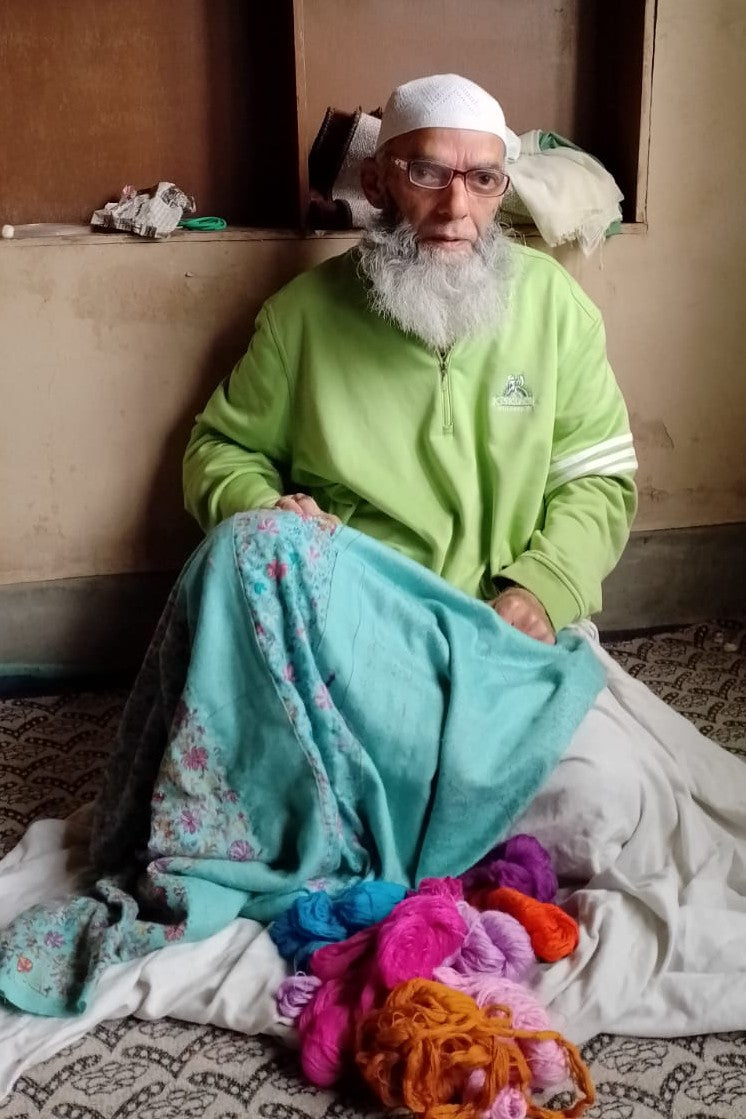
Authentic Pashmina is always hand-spun and hand-woven in the Kashmir Valley using techniques passed down through generations. A single shawl can take weeks or even months to complete, depending on the complexity of the design.
A Brief History of Kashmiri Pashmina
The art of weaving Pashmina in Kashmir dates back over 600 years. It flourished under the Mughal Empire, where it became a symbol of royalty and prestige. Emperor Akbar was known to have a special fondness for Kashmiri shawls, and they were frequently exchanged as diplomatic gifts.
In the 18th and 19th centuries, Kashmiri Pashmina shawls captivated European aristocracy. Napoleon Bonaparte presented a Kashmiri shawl to Empress Joséphine, and the popularity of these shawls spread across France and England. Today, the tradition continues with the same meticulous handcraftsmanship, now protected by the Geographical Indication (GI) tag.
The GI tag, introduced in India in 2003, was a turning point. It legally protected the term "Pashmina" and ensured that only shawls made from genuine Changthangi goat fibre and handwoven in Kashmir could be sold as authentic Pashmina. This protection helps preserve the heritage and supports the livelihoods of thousands of Kashmiri artisans.
Why Genuine Pashmina Is Expensive
Many buyers wonder why authentic Pashmina costs significantly more than mass-produced scarves. The answer lies in the rare fibre, the labour-intensive process, and the cultural heritage embedded in each shawl.
- Rare fibre: Each Changthangi goat produces only about 80–100 grams of usable undercoat per year. It takes the fleece of 3–4 goats to make a single Pashmina shawl.
- Hand-spinning: The fibre is spun by hand on traditional charkhas (spinning wheels), a slow and skilled process.
- Hand-weaving: A master weaver can take anywhere from 1 week to 18 months to complete a single shawl, depending on the complexity.
- Embroidery: Sozni and other hand embroidery require years of training and countless hours of meticulous work.
- Certification: GI and CDI certifications involve rigorous testing and quality checks.
- Ethical labour: Authentic manufacturers pay fair wages to artisans, supporting entire communities.
How to Identify Authentic Pashmina
With so many imitations on the market, knowing how to spot the real thing is essential. Here are the key checks to make before buying:
1. Look for GI Certification
Genuine Pashmina carries a Geographical Indication (GI) tag issued by the Government of India. This is the definitive guarantee of a shawl's origin and authenticity. Every GI-certified shawl includes a unique QR code sticker that you can scan to verify its origin and registration details on the government portal.
2. Check the Price
Authentic Pashmina is a luxury product. If a shawl is priced under ₹3,000–5,000 (or under $100) and labelled "100% Pashmina," it is almost certainly a blend, synthetic, or machine-made imitation. Genuine handwoven Pashmina typically starts at ₹15,000+ in India.
3. Feel the Texture
Real Pashmina is soft, warm, and slightly textured. It is not overly slippery or silky like synthetic blends. Hold it to your face — you'll feel instant warmth.
4. Examine the Weave
Handwoven Pashmina has subtle, natural irregularities in the weave. Machine-made fabric is perfectly uniform. Hold the shawl up to light — you should see slight variations in the threads.
5. Check the Seller's Transparency
Authentic sellers openly share details about the fibre source, weaving process, artisan background, and certifications. If a seller is vague or evasive, it's a red flag.

Authentic vs Fake Pashmina — Comparison Table
| Feature | Authentic Pashmina | Fake / Imitation |
|---|---|---|
| Fibre | 100% Changthangi goat wool | Viscose, acrylic, or blended cashmere |
| GI Tag | ✅ Yes — verifiable QR code | ❌ No or fake sticker |
| CDI Verified | ✅ Yes — Craft Development Institute | ❌ No |
| Handwoven | ✅ Yes — irregular weave | ❌ Machine-made — uniform |
| Price (India) | ₹15,000+ | ₹3,000 – ₹8,000 |
| Warmth | Instant insulation | Minimal or no warmth |
How GI Certification Works
The Geographical Indication (GI) certification process is rigorous and government-controlled. Here's how it works:
- Application: Manufacturers apply to the Geographical Indications Registry, Government of India.
- Testing: The Craft Development Institute (CDI) conducts multiple tests to verify fibre purity, handcraftsmanship, and quality.
- Inspection: A team of experts inspects the weaving process and the finished product.
- Approval: Only shawls that pass all tests receive the GI tag and a unique QR code.
- Verification: Buyers can scan the QR code to access the government's verification portal and confirm authenticity.
Pashmina vs Cashmere — What's the Difference?
Many buyers confuse Pashmina with cashmere. While all Pashmina is cashmere, not all cashmere is Pashmina. Here's the distinction:
| Feature | Pashmina | Cashmere |
|---|---|---|
| Fibre Source | Changthangi goat (Ladakh, India) | Various goat breeds (China, Mongolia, Iran) |
| Fibre Diameter | 12–16 microns | 14–19 microns |
| Origin | Kashmir Valley (GI protected) | Global |
| Craftsmanship | Hand-spun, hand-woven in Kashmir | Often machine-spun and machine-woven |
| GI Certification | ✅ Yes (GI Tag) | ❌ No |
| Price (India) | ₹15,000+ | ₹5,000 – ₹15,000 |
Pashmina is the finest grade of cashmere, distinguished by its specific origin, finer fibre, and traditional handcraftsmanship. When you buy Pashmina, you are buying the best cashmere in the world.
Where to Buy Pashmina Shawls in India
If you are searching for buy pashmina shawls in India, you have several options. However, not all are equally reliable.
Online Marketplaces (Amazon India, Flipkart, Meesho)
Pros: Wide selection, fast delivery. Cons: Very high counterfeit risk; many sellers mislabel synthetic scarves as "pashmina."
Boutique Resellers & Department Stores
Pros: Brand recognition, easy returns. Cons: Significant markups (often 2–3× the manufacturer price), limited origin transparency.
Direct Kashmiri Manufacturers (like Kepra)
Pros: GI-certified, transparent pricing, direct artisan relationships, government-registered. Cons: Requires a bit more research — but that's exactly how you avoid fakes.
For Indian buyers, buying directly from a registered Kashmiri manufacturer like Kepra ensures you receive a product with GI certification, CDI verification, and authentic handcraftsmanship. We ship from Srinagar directly to your doorstep with tracking.

Why Trust Kepra?
Every Pashmina shawl is individually inspected before dispatch. Where applicable, GI-certified products include a verifiable QR code for authenticity. Our team works directly from Srinagar, Kashmir, helping preserve traditional handloom craftsmanship while delivering authentic Pashmina to customers worldwide.
- Registered manufacturer in Srinagar with the J&K Handicrafts Department (HD/DDQC/TTA/R/103).
- GI Certified — every shawl carries a verifiable GI QR code.
- CDI Verified — inspected by the Craft Development Institute, Government of Jammu & Kashmir.
- Direct relationships with over 7,000 master Kashmiri artisans.
- Secure international and domestic shipping — fully tracked.
- Free shipping within India and worldwide.
How We Ship Your Pashmina
Whether you're in India or abroad, we handle every step with care:
We offer free shipping to all Indian addresses and worldwide. Delivery within India typically takes 3–10 business days; international takes 7–14 business days.
Common Mistakes Buyers Make
- Buying based only on price — The cheapest option is almost never genuine Pashmina.
- Assuming every "100% Pashmina" label is genuine — Many sellers use this label loosely.
- Ignoring GI certification — If it doesn't have a GI tag, it's not authentic Pashmina.
- Not asking where the shawl was woven — Genuine Pashmina comes from Kashmir.
- Buying from sellers who cannot explain the weaving process — Authentic manufacturers are proud to share their craft.
- Believing that machine-made is "just as good" — Machine-made lacks the warmth, durability, and cultural value of handwoven Pashmina.
Pashmina Care Guide – How to Protect Your Investment
With proper care, a genuine Pashmina shawl can last for decades. Follow these simple steps:
- Dry clean only — Always use a reputable dry cleaner.
- If hand-washing, use cold water and a mild wool detergent. Never wring or twist.
- Store in a breathable cotton bag with cedar or lavender to deter moths.
- Fold rather than hang to prevent stretching.
- Use a steam iron on the lowest setting with a pressing cloth — never iron directly.
Pashmina Buying Guide by Budget
| Budget Range (₹) | What You Can Buy | What to Expect |
|---|---|---|
| ₹3,000 – ₹8,000 | Likely a blend or synthetic | Not genuine Pashmina; may be machine-made or mixed with viscose. |
| ₹15,000 – ₹40,000 | Authentic plain or lightly embroidered Pashmina | Handwoven, GI-certified, pure Changthangi fibre. |
| ₹40,000 – ₹1,00,000 | Sozni embroidered, Hashidaar, or fine Kani | Intricate handwork, museum-quality artistry. |
| ₹1,00,000+ | Jamawar, bridal, or collector's pieces | Heirloom quality, rare designs, months of labour. |
Explore Authentic Pashmina Collections
A genuine Pashmina shawl is an investment in heritage, craftsmanship, and timeless elegance. Browse our curated range:
Plain Pashmina
Elegant, minimalist, and versatile — a timeless wardrobe staple.
Sozni Embroidery
Intricate hand-embroidered floral and paisley motifs — a labour of love.
Kani Shawls
Woven with traditional wooden sticks, creating intricate, colourful patterns.
Jamawar
Antique-inspired floral designs — highly prized by collectors.
Men's Pashmina
Refined, understated designs for formal and winter wear.
Stoles & Scarves
Lightweight wraps for everyday elegance.
Which Pashmina Should You Buy?
| Looking For | Best Choice |
|---|---|
| Daily wear, versatile | Plain Pashmina |
| Weddings & festive occasions | Sozni Embroidery |
| Collector's piece, heirloom | Kani Shawl |
| Luxury gifting | Jamawar |
| Men's formal style | Hashidaar / Men's Shawl |
Final Buying Checklist
Before you click "buy," run through this quick checklist:
- Does the product have a GI tag? — If not, it's not authentic.
- Is the price realistic? — Under ₹15,000 is a red flag for a full-sized shawl.
- Can the seller explain the fibre source? — Authentic sellers know their Changthangi wool.
- Is the seller transparent about the weave? — Handwoven has irregularity; machine-made is uniform.
- Does the seller have a physical presence? — Registered manufacturers have heritage stores.
- Are there verified reviews? — Real customers sharing real experiences.
About Kepra – A Kashmir-Based Manufacturer
Kepra is a Kashmir-based manufacturer specialising in authentic handwoven Pashmina shawls. We focus on traditional craftsmanship, certified products, and direct worldwide delivery. Established in 1944, Kepra is a fourth-generation family business with a heritage store in Srinagar. Our mission is to preserve the art of handweaving while ensuring fair wages and ethical practices for our artisan community.
We invite you to explore our collection and experience the true warmth of Kashmir.
Shop GI-certified Pashmina – free shipping in India & worldwide.
Handwoven in Kashmir • 81+ years of craftsmanship
Frequently Asked Questions
Pashmina is considered one of the finest and most prized grades of cashmere. It comes from the Changthangi goat in Ladakh and is hand-spun and hand-woven in Kashmir, offering exceptional softness, warmth, and cultural value.
GI certification is a key government-backed guarantee that a Pashmina shawl is authentic. It verifies fibre origin, handcraftsmanship, and adherence to strict quality standards.
Scan the GI QR code with your smartphone. This takes you to the Government of India's verification portal, where you can confirm the shawl's authenticity and registration details.
Cheap shawls labelled "Pashmina" are almost always blends, synthetics, or machine-made imitations. Genuine Pashmina requires rare fibre and months of artisan labour, making it a luxury product priced accordingly.
Dry clean only. Store flat in a breathable bag with cedar or lavender. Never wring or twist. With proper care, your Pashmina will last a lifetime.
Sozni is fine hand embroidery using a single needle, creating delicate floral motifs. Kani is a weaving technique using wooden sticks to create intricate, colourful patterns directly in the fabric.
A plain shawl can take 1–3 weeks to weave. A Kani or heavily embroidered shawl can take 3–18 months, depending on the complexity.
Yes. We ship to all major cities including Delhi, Mumbai, Bengaluru, Chennai, Kolkata, Hyderabad, Pune, and every other address in India via trusted courier partners.
True luxury begins with authenticity. Choose wisely.